




 Neueste Kommentare

 PDF Demo
Praxis für Präfekt & Pass sicher
Vor allem kennen wir die Bedeutung der OGEA-102 Zertifizierung. Jetzt ist die Frage für uns, wie man die Prüfung OGEA-102 erfolgreich bestehen kann. Der Schlüssel zum Erfolg ist die Verbindung der IT-Technologie und Ihre Anwendungsfähigkeit bei der Fehlersuche. Im Allgemeinen ist unsere persönliche Fähigkeit aus Ihrem normalen Kurs sehr begrenzt und Ihr Wissen ist unordentlich. D.h., verlässlicher OGEA-102 Prüfung-Studienführer ist notwendig für Ihre Überprüfung, was Ihnen bei Ihrer Ausbildung hilft und einen besseren Studium bringt.
Erstens ist The Open Group OGEA-102 zuverlässige Übung Bootcamp eine gute Empfehlung für Ihre Vorbereitung. Wenn Sie unsere Website besuchen, finden Sie drei verschiedene Formen von OGEA-102 Praxis Dumps. Wir können die Formen den unterschiedlichen Bedürfnissen des Marktes anpassen. Wenn Sie des Bildschirmes müde sind, ist die OGEA-102 pass4sure pdf Version Ihnen geeignet, weil sie in Papiere gedruckt werden kann und bequem zu markieren sind. Mit den Papieren Materialien können Sie beachten und die Prüfung Dumps nach Belieben üben. Für die Leute, die weniger Zeit und keine zusätzliche Energie haben, OGEA-102 pass4sure SOFT & APP Version muss die beste Wahl sein, die Ihnen schnell beherrschen und interaktive Erfahrung geben kann. Nachdem Sie die praktische OGEA-102 Fragen bekommen, müssen Sie probieren, auswendig zu lernen. Es is nicht schwer, denn es gibt nur Fragen und Antworten.
Außerdem gibt es keinen Zweifel an der hohen Qualität und Best-Validität der OGEA-102 pass4sure Dumps. Wir haben ein stark professionelles Team, was sich der Erforschung von OGEA-102 Praxisfragen widmet. Die Qualität und die Mengen von OGEA-102 pass4sure Dumps werden von den Experten streng kontrolliert. Wir zielen auf den besten nützlichen OGEA-102 pass4sure Fragen & Antworten ab und bieten Ihnen die neuesten Informationen über OGEA-102 tatsächlichen Test an. Mit der nützlichen und hochwertigen Praxis Dumps können Sie den OGEA-102 tatsächlichen Test gut zu bestehen.
Sofortiges Herunterladen
Vor dem Kauf können viele Kunden fragen, wie man die OGEA-102 Praxis Bootcamp nach der Bestellung und Zahlung bekommen. Es ist sehr leicht. Eine E-Mail von uns mit den Dumps, die Sie gekauft haben, wird Ihnen gesendet. Sobald Sie bezahlen, können Sie die The Open Group OGEA-102 Praxis Dumps sofort herunterladen, dann widmen Sie sich in der Ausbildung ohne Zeitverschwendung.
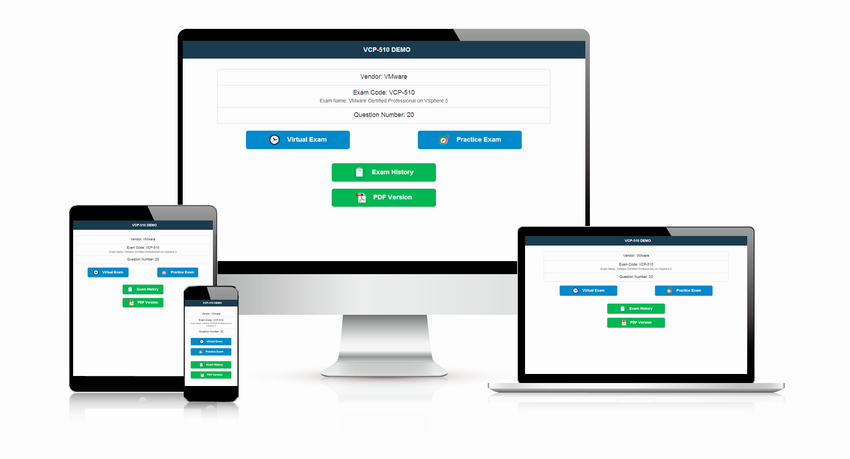
Auf Windows/ Mac/ Android/ iOS (iPad, iPhone) sowie andere Betriebssysteme ist die Online Test Engine für OGEA-102 Fragenkataloge auch verwendbar, denn diese basiert auf der Software vom Web-Browser.
In der IT-Branche oder für den IT-Praktiker ist Enterprise Architecture OGEA-102 Zertifizierung viel wichtiger als ein Stück Papier. Wenn ein IT-Unternehmen professionelle Mitarbeiter rekrutiert, müssen sie hoffen, dass der Mitarbeiter professionell genug ist und einen reibungslosen Betrieb mit geringem Risiko und mehr Nutzen beitragen. Zunehmend spielt die Zertifizierungsprüfung Enterprise Architecture OGEA-102 in der IT-Branche eine wichtige Rolle und ist ein konkreter Vorteil. Eine Person mit OGEA-102 Zertifizierung kann das Risiko verringern, denn sie kann mehr Projekte rechtzeitig und innerhalb des Budgets abschließen und die Software innerhalb und außerhalb verstehen, was zu einer höheren Benutzerakzeptanz führt und mehr Gewinne schafft. Nachdem Sie die Enterprise Architecture OGEA-102 Zertifizierung gewonnen haben, können Sie die Chance haben, einer großen Firma beizutreten, und Sie erhalten eine reiche Belohnung zusammen mit einer höheren Position, wenn Sie Wert für das Unternehmen schaffen. Jeder will ein besseres Leben aufbauen und eine gute Zukunft haben. Die OGEA-102 Zertifizierung ist deswegen wichtig. Aber die Leute haben die OGEA-102 tatsächliche Prüfung mehrmals versucht und kosten mehr Zeit. Haben Sie keine Angst bitte, obwohl das Examen schwer ist. Denn es gibt immer Möglichkeiten, die Schwierigkeit zu überwinden und den Erfolg zu bekommen. Hier können Sie sich für Ihre OGEA-102 Prüfungsvorbereitung anmelden.

The Open Group OGEA-102 Prüfungsthemen:
| Abschnitt | Ziele |
|---|---|
| Thema 1: Umsetzung und Steuerung der Architektur | - Planung der Umstellung - Steuerung der Umsetzung - Änderungsmanagement für die Architektur - Chancen und Lösungsansätze |
| Thema 2: Geschäftsarchitektur, Informationssystemarchitektur und Technologiearchitektur | - Gestaltung der Daten- und Anwendungsarchitektur - Entwicklung und Analyse der Geschäftsarchitektur - Überlegungen zur Technologiearchitektur und Infrastruktur |
| Thema 3: Anwendung der Architekturentwicklungsmethode (ADM) | - Vorbereitungsphase und Anwendung des Architekturrahmens - Architekturvision und Stakeholder-Management |
The Open Group TOGAF Enterprise Architecture Part 2 OGEA-102 Prüfungsfragen mit Lösungen
Frage #1
Scenario
Your role is that of an Enterprise Architect, reporting to the Chief Enterprise Architect, at a technology company.
The company uses the TOGAF standard as the method and guiding framework for its Enterprise Architecture (EA) practice. The Chief Technology Officer (CTO) is the sponsor of the activity. The EA practice uses an iterative approach for its architecture development. This has enabled the decision-makers to gain valuable insights into the different aspects of the business.
The nature of the business is such that the data and the information stored on the company systems is the company's major asset and is highly confidential. The company employees travel a lot for work and need to communicate over public infrastructure. They use message encryption, secure internet connections using Virtual Private Networks (VPNs), and other standard security measures. The company has provided computer security awareness training for all its staff. However, despite good education and system security, there is still a need to rely on third-party suppliers for infrastructure and software.
The Chief Security Officer (CSO) has noted an increase in ransomware (malicious software used in ransom demands) attacks on companies with a similar profile. The CSO recognizes that no matter how much is spent on education and support, the company could be a victim of a significant attack that could completely lock them out of their important data.
A risk assessment has been completed, and the company has looked for cyber insurance that covers ransomware. The price for this insurance is very high. The CTO recently saw a survey that said 1 out of 4 businesses that paid ransoms could not get their data back, and almost thesame number were able to recover the data without paying. The CTO has decided not to get cyber insurance to cover ransom payment.
You have been asked to describe the steps you would take to strengthen the current architecture to improve data protection.
Based on the TOGAF standard, which of the following is the best answer?
A. You would monitor for technology updates from your existing suppliers that could enhance the company's capabilities to detect, react, and recover from an IT security incident. You would prepare and run a disaster recovery planning exercise for a ransomware attack and analyze the performance of the current Enterprise Architecture. Using the findings, you would prepare a gap analysis of the current Enterprise Architecture. You would prepare change requests to address identified gaps. You would add the changes implemented to the Architecture Repository.
B. You would assess business continuity requirements and analyze the current Enterprise Architecture for gaps. You would recommend changes to address the situation and create a change request. You would engage the Architecture Board to assess and approve the change request. Once approved, you would create a new Request for Architecture Work to begin an ADM cycle to implement the changes.
C. You would request an Architecture Compliance Review with the scope to examine the company's ability to respond to ransomware attacks. You would identify the departments involved and have them nominate representatives. You would then tailor checklists to address the requirement for increased resilience. You would circulate to the nominated representatives for them to complete. You would then review the completed checklists, identifying and resolving issues. You would then determine and present your recommendations.
D. You would ensure that the company has in place up-to-date processes for managing change to the current Enterprise Architecture. Based on the scope of the concerns raised, you recommend that this be managed at the infrastructure level. Changes should be made to the baseline description of the Technology Architecture. The changes should be approved by the Architecture Board and implemented by change management techniques.
Frage #2
You are employed as an Enterprise Architect within an Enterprise Architecture (EA) team at an environmental agency. The agency has multiple divisions, and is responsible for overseeing environmental protection, regulation, and conservation efforts.
The agency has a well-established EA practice and follows the TOGAF standard as its method for architecture development. Along with the EA program, the agency also uses various management frameworks, including business planning, project/portfolio management, and operations management. The EA program is sponsored by the Chief Information Officer (CIO), who has actively promoted architecting with agility within the EA department as the preferred approach for projects.
The agency is preparing itself for a world where Artificial Intelligence (Al) is widely adopted. As a result, the agency is looking to determine the impact and role that Al will play moving forward.
The CIO has approved a Request for Architecture Work to look at how Al can be used for services across the agency. She has noted that digital platforms will be a priority for investment in order to scale the planned Al applications. Using Al to automate tasks and make things run smoother is seen as a big advantage. Process automation, and improved efficiency from manual, repetitive activities has been identified as the key benefits of applying generative Al to their agency ' s business. This will include back-office automation, for example, for help center agents who receive hundreds of email enquiries. This should also improve services for their customers by making them more efficient and personalized, tailored to each individual's needs.
Many of the agency leaders are worried about relying too much on Al. Some leaders think their employees will need to learn new skills. Some employees are worried they might lose their jobs to Al. Other leaders worry about security and cyber resilience in the digital platforms needed for Al to be successful.
Refer to the scenario
The EA team leader has asked how to address the concerns, and how to manage the risks of a new architecture for the project.
Based on the TOGAF standard which of the following is the best answer?
A. You recommend conducting an analysis that separates the different types of stakeholders into groups.
They can be put into categories including corporate functions, end-user organization, project organization, systems, and external. Models should be developed for each stakeholder category to ensure that that all the necessary information and details are considered. A meeting should be held with the stakeholders to verify that their concerns have been addressed. Risk management will be considered during the Implementation Governance phase.
B. You recommend an assessment of the power, influence, and interest of key individuals affected by the project. This includes documenting the positions, concerns, issues, and cultural factors of each interest group. This information will shape how the architecture is presented and explained. The concerns and relevant views can be defined for each group and recorded in the Architecture Vision document. The requirements for addressing risk should be recorded in the Architecture Requirements Specification and checked through regular assessments and feedback.
C. You recommend creating an Organization Map to display the links between different parts of the agency. This will help the EA team to find and involve all areas of the agency impacted by this strategic change. Multiple business models should then be created that can be applied to Al related projects. A meeting will be held with the stakeholders to teach them how to interpret the models and see how their concerns are being addressed. Risk will be managed as part of the Security Architecture development.
D. You recommend that the key stakeholders be formally identified. This should include those who will be most helpful for the change to be successful. A Communication Plan should be made to address their needs. This plan should include a report that summarizes the key features of the architecture based on stakeholder requirements and addressing concerns. You meet with each key stakeholder to make sure their concerns are being addressed. You make sure that the architecture being developed clearly addresses risk management.
Frage #3
Please read this scenario prior to answering the question
You are employed as an Enterprise Architect at a company. The company manages large-scale farming operations with food production, processing, and distribution. The goal of the company is to maximize profit while satisfying the needs of consumers for its products. Its customers demand food that is produced sustainably, safely, and transparently, while reducing environmental impact.
The business is highly mechanized, and this mechanization has brought about a decrease in the number of workers needed, together with a focus on agricultural engineering to improve the efficiency of its farms, its processing facilities, and the overall enterprise. As part of this, the company has established an Enterprise Architecture (EA) practice based on the TOGAF standard, using it as the method and guiding framework. The Chief Information Officer (CIO) is the sponsor of EA practice.
The practice has adopted an iterative approach for its architecture development. This has enabled the decision makers to have valuable insights into the different aspects of the business.
In recent years there have been a series of bad harvests, and a major reduction in yields of the main crop produced by the company. This combined with an increase in costs for energy, feed, fuel, and fertilizer, had led to a significant decrease in profits.
The rising costs and lower profits mean that the company is unable to take as much planned action on climate measures as it would like, such as reducing its carbon footprint. The Chief Executive Officer (CEO) has stated that big changes are needed to improve yields and profitability.
The outline strategy for change, includes new products, and new markets. The company will switch to a mix of crops rather than depend on a main crop and will allow use of its processing facilities by third parties. This is a major decision, and the CEO has stated a desire to repurpose and reuse rather than replace so as to manage the risks and limit the costs.
The CIO has assigned the EA team to manage this project. The CIO has stated that although the overall objective is known, the EA team are expected to define the scope, a shared vision, and the requirements.
Refer to the scenario
You have been asked to recommend the best approach for architecture development to realize the CEO ' s change in direction for the company.
Based on the TOGAF standard which of the following is the best answer?
A. The team first needs to understand the problem and define the structure of thechange. It should start iteration cycles on a baseline first approach toarchitecture development, and then transition planning.
This will identify thechange needed to transition from the baseline to the target and can be used towork out in detail what the agreed vision is for the change.
B. The team should start its iteration cycles of architecture development by goingthrough the architecture definition phases (B-D) with a baseline first approach.This will support the change in direction as stated by the CEO. It will ensurethat the change can be defined in a structured manner and address therequirements needed to realize the change.
C. The team should start on architecture definition and operate multiple ADMphases concurrently to support this change in direction. Once understood, theteam will identify the requirements, drivers, issues, and constraints for thechange. You would include non-functional requirements in the architecturedevelopment to make sure that the target architecture meets it compliance andregulatory requirements.
D. The team should start by defining the baseline Technology Architecture in orderto assess the current infrastructure capacity and capability for the company.Then the focus should be on transition planning and incremental architecturedeployment. This will identify requirements to ensure that the projects aresequenced in an optimal way to realize the change.
Frage #4
Please read this scenario prior to answering the question
You are working as the Chief Enterprise Architect within a law firm specializing in personal injury cases.
Many of the firm ' s competitors have improved their litigation strategies, and efficiency by streamlining their processes using Artificial Intelligence {Al).
The CIO has approved a Request for Architecture Work to examine the use of Machine Learning in defining a new Al-driven litigation and finance process for the firm. This process would instruct the lawyers and analysts as to what tasks and portfolio they should work on. The key objectives are to increase task profitability, maximize staff utilization, and increase individual profitability.
The CIO has emphasized that the architecture should enable the fast implementation of continuous Machine Learning. The solution will need to be constantly measured for delivered value and be quickly iterated to success.
Some of the partners have expressed concerns about letting the Al make the decisions, others about the risks associated with use of it for the type of service they deliver. The CIO wants to know if these concerns can be addressed, and how risks will be covered by a new architecture enabling Al and Machine Learning.
Refer to the scenario
You have been asked to respond to the CIO recommending an approach that would enable the development of an architecture that addresses the concerns of the CIO and the concerns of the partners.
Based on the TOGAF standard which of the following is the best answer?
A. You recommend that a Communications Plan be created to address the key stakeholders, the most powerful and influential partners. This plan should include a report that summarizes the key features of the architecture reflecting their requirements. You will check with each key stakeholder that their concerns are being addressed. Risk mitigation and agility will be explicitly addressed as a component of the architecture being developed.
B. You recommend that all possible models be created for each candidate architecture that will enable the Al and Machine Learning solution. This ensures that all the necessary data and detail is addressed. A formal review should be held with the stakeholders to verify that their concerns have been properly addressed by the models. Agility will be considered during Phase G Implementation Governance.
C. You recommend that an analysis of the stakeholders is undertaken resulting in documenting the stakeholders and their concerns in a Stakeholder Map. The concerns and relevant views should then be defined for each group and recorded in the Architecture Vision document. The requirements will include risk mitigation through regular assessments. This will also allow a supervised agile implementation of the continuous Machine Learning.
D. You recommend creation of a set of business models that can be applied uniformly across all architecture projects. The stakeholders will be trained to understand the business models to ensure they can see that their concerns are being addressed. Risk will be addressed once the Security Architecture is developed, which will happen later to avoid slowing down the agility required by the CIO.
Frage #5
Please read this scenario prior to answering the question
You are working as Chief Enterprise Architect at a large Internet company. The company has many divisions, ranging from cloud to logistics. The company has grown rapidly, expanding from initially selling physical books and media to a range of services including an online marketplace, live-streaming. eBooks. and cloud services.
Overall management of the numerous divisions has become challenging. Recent high-profile projects have overrun on budget and under delivered, damaging the company ' s reputation, and adversely impacting its share price. There is a widely held view within the executive management that the organization structure has played a major role in these project failures.
The company has an established Enterprise Architecture program based on the TOGAF standard, sponsored jointly by the Chief Executive Officer (CEO) and Chief Information Officer (CIO). The CEO has decided that the company needs to reorganize its divisions around artificial intelligence and machine learning with a focus on automation. The CEO has worked with the Enterprise Architects to create a strategic architecture for the reorganization, including an Architecture Vision, together with definitions for the four domain architectures.
This sets out an ambitious vision of the future of the company over a three-year period. This includes a set of work packages and includes three distinct transformations.
The CIO has made it clear that prior to the approval of the detailed Implementation and Migration plan, the EAteam will need to assess the risks associated with the proposed architecture. He has received concerns from key stakeholders across the company that the proposed reorganization may be too ambitious and there is doubt whether it can produce sufficient value to warrant the risks.
Refer to the scenario
You have been asked to recommend an approach to satisfy these concerns. Based on the TOGAF Standard, which of the following is the best answer?
A. The Enterprise Architects should bring together information about potential approaches and produce several alternative target transition architectures. They should then investigate the different architecture alternatives and discuss these with stakeholders using the Architecture Alternatives and Trade-offs technique. Once the target architecture has been selected, it should be analyzed using a state evolution table to determine the Transition Architectures. A value realization process should then be established to ensure that the concerns raised are addressed.
B. The Enterprise Architects should evaluate the organization ' s readiness to undergo change. This will allow the risks associated with the transformations to be identified, classified, and mitigated for. This should include identifying dependencies between the set of changes, including gaps and work packages.
It will also identify improvement actions to be worked into the Implementation and Migration Plan. The business value, effort, and risk associated for each transformation should be determined.
C. Before preparing the detailed Implementation and Migration plan, the EnterpriseArchitects should review and consolidate the gap analysis results from Phases B toThis will identify the transformations required to achieve the proposed TargetArchitecture. The Enterprise Architects should then assess the readiness of theorganization to undergo change and determine an overall direction to address andmitigate risks identified. The Transition Architecture should then be planned to use astate evolution table.
D. Establishing interoperability in alignment with the corporate operating model will ensure risks are minimized. The Enterprise Architects should apply an interoperability analysis to evaluate any potential issues across the architecture. This should include the development of a matrix showing the interoperability requirements. These can then be included within the transformation strategy embedded in the target transition architectures. The Enterprise Architects should then finalize the Architecture Roadmap and the Implementation and Migration Plan.
Fragen und Antworten:
| Frage #1 Antwort: C | Frage #2 Antwort: B | Frage #3 Antwort: A | Frage #4 Antwort: C | Frage #5 Antwort: B |
 Qualität und WertWir stellen Ihnen hochqualitative und hochwertige Fragen&Antworten zur Verfügung.
 Ausgearbeitet und überprüftAlle Fragen&Antworten werden von professionellen Zertifizierungsdozenten ausgearbeitet und überprüft.
 Leichtes Bestehen der ZertifizierungsprüfungWenn Sie unsere Produkte benutzen, werden Sie die Prüfung bei der ersten Probe bestehen.
 Proben vor dem EinkaufSie können Demos gratis herunterladen, bevor Sie unsere Produkte einkaufen.

